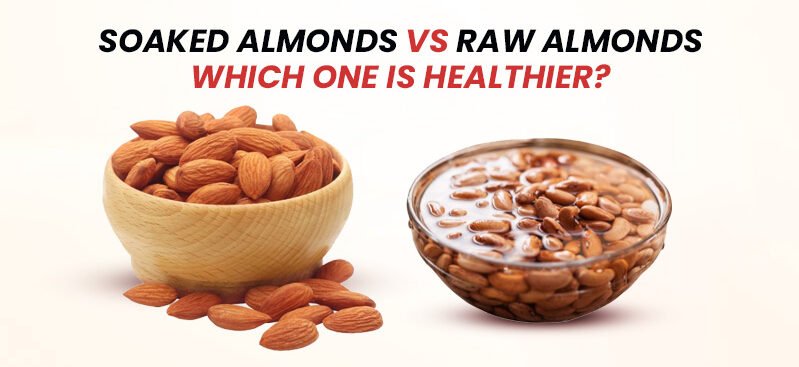
Almonds are one of those foods that almost everyone agrees are “healthy.” They’re simple, widely available, and easy to add to daily life. But once you go a little deeper, two common questions come up: Let’s look at both—clearly and practically. Why Almonds Are Considered a Daily Superfood Almonds are nutrient-dense, meaning they provide a […]
Almonds are one of those foods that almost everyone agrees are “healthy.” They’re simple, widely available, and easy to add to daily life.
But once you go a little deeper, two common questions come up:
Do almonds really support brain and heart health?
Are soaked almonds actually better than raw ones?
Let’s look at both—clearly and practically.
Why Almonds Are Considered a Daily Superfood
Almonds are nutrient-dense, meaning they provide a lot of nutrition in a small portion.
They contain:
Healthy fats
Vitamin E
Magnesium
Protein
Fiber
This combination makes them more than just a snack—they support multiple systems in the body.
A small daily habit like eating almonds can have a long-term impact.
Brain Health: What Almonds Actually Do
Almonds are often associated with brain function, and there’s a reason for that.
They contain nutrients that support:
Nerve function
Memory processes
Protection against oxidative stress
Vitamin E, in particular, plays a role in protecting brain cells from damage over time.
While almonds won’t “boost intelligence,” regular intake supports overall brain health and cognitive function.
Heart Health: A Stronger Connection
The link between almonds and heart health is even more established.
They help:
Support healthy cholesterol levels
Provide beneficial fats
Reduce inflammation
These factors contribute to better cardiovascular health over time.
Heart health is built through daily habits, not occasional changes—and almonds fit naturally into that pattern.
Energy and Satiety
Almonds are also effective for maintaining steady energy.
They:
Digest slowly
Keep you full longer
Reduce unnecessary snacking
This makes them useful for:
Busy days
Weight management
Balanced eating
Soaked vs Raw Almonds: What’s the Difference?
Now to the question many people debate.
Soaking almonds usually involves:
Removing the skin before eating
Leaving them in water overnight
This practice is common in traditional diets.
The Claim: Why People Prefer Soaked Almonds
Some common beliefs include:
Easier digestion
Better nutrient absorption
Reduced “anti-nutrients”
These ideas are often passed down culturally.
What Science Actually Says
Here’s a more balanced view.
1. Digestion
Soaking almonds may make them:
Slightly softer
Easier to chew and digest for some people
This can be helpful, especially for those with sensitive digestion.
2. Nutrient Absorption
Almonds contain compounds like phytic acid, which can affect mineral absorption.
Soaking may reduce this slightly—but in real diets, the impact is not significant for most people.
3. Skin Removal
The skin of almonds contains:
Antioxidants
Fiber
Removing it means losing some of these benefits.
Soaked almonds are not necessarily “better”—they are just different.
Which One Should You Choose?
The practical answer is simple:
If you prefer soaked almonds → continue
If you prefer raw almonds → that’s perfectly fine
Both provide similar core benefits.
The difference is more about:
Personal preference
Digestive comfort
Best Way to Include Almonds Daily
Eat a small handful (about 8–10 almonds)
Use them as a snack instead of processed foods
Combine with other nuts or seeds for variety
Consistency matters more than the form.
Final Thought
Almonds are not powerful because of how you prepare them—but because of how regularly you include them in your diet.
Whether soaked or raw, almonds remain one of the simplest and most reliable foods for long-term health.
And sometimes, the simplest habits are the ones that make the biggest difference over time.