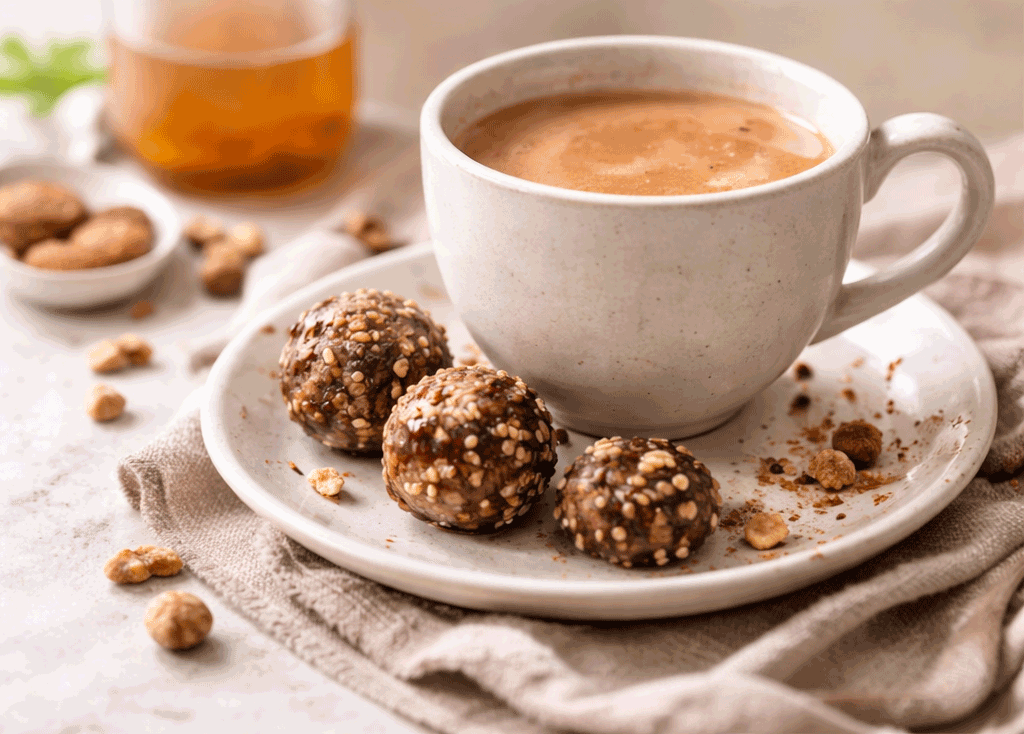
For many people, sweetness is part of daily life—especially in tea, coffee, and home cooking. The challenge isn’t just reducing sugar, but finding alternatives that still feel satisfying without relying on refined options. Natural sweeteners offer a practical middle ground. They don’t remove sweetness completely, but they allow you to use better sources and often […]
For many people, sweetness is part of daily life—especially in tea, coffee, and home cooking. The challenge isn’t just reducing sugar, but finding alternatives that still feel satisfying without relying on refined options.
Natural sweeteners offer a practical middle ground. They don’t remove sweetness completely, but they allow you to use better sources and often in smaller amounts.
The goal is not to eliminate sweetness—it’s to improve how you use it.
Here’s a clear guide to the best natural sweeteners for everyday use, based on taste, practicality, and how they behave in different situations.
1. Jaggery (Gur) – Best for Tea and Traditional Use
Jaggery has been used for generations in tea and desi recipes.
Why it works:
Rich, deep flavor
Less processed than sugar
Blends well in hot liquids
Best for:
Tea (chai)
Traditional desserts
Winter drinks
It gives a more rounded taste compared to plain sugar, which often means you use less.
2. Honey – Best for Light Sweetness
Honey offers a smoother, lighter sweetness.
Why it works:
Dissolves easily
Adds a subtle flavor
Works well in warm drinks
Best for:
Tea (especially herbal or green tea)
Warm water drinks
Light recipes
It’s usually better to avoid very high heat, as that can reduce some of its natural properties.
3. Date Syrup – Best for Cooking and Rich Flavor
Date syrup has a deep, caramel-like taste and works especially well in food.
Why it works:
Thick consistency
Strong flavor
Derived from whole fruit
Best for:
Baking and desserts
Oats and breakfast bowls
Sauces and marinades
It adds both sweetness and body to recipes.
4. Whole Dates (Blended) – Best Whole-Food Option
Using dates directly is one of the simplest ways to sweeten food naturally.
Why it works:
Contains fiber
Less processed
Naturally sweet
Best for:
Smoothies
Desserts
Energy snacks
It’s closer to whole food than most sweeteners.
5. Stevia (Plant-Based Option) – For Low-Calorie Needs
Stevia is a plant-derived sweetener with no calories.
Why it works:
Does not raise blood sugar
Requires very small amounts
Best for:
Tea or coffee (in small quantities)
People managing calorie or sugar intake
Taste can vary depending on the product, so quality matters.
Choosing the Right Sweetener for the Right Use
Each sweetener behaves differently.
For chai → jaggery works best
For light tea → honey fits well
For cooking → date syrup is ideal
For strict sugar control → stevia is more suitable
The best choice depends less on which is “healthiest” and more on how you use it.
A Practical Tip That Makes a Difference
Instead of just replacing sugar, try gradually reducing sweetness overall.
Use slightly less each time
Allow your taste to adjust
Focus on flavor, not just sweetness
Over time, you may find you need much less than before.
Final Thought
Natural sweeteners are not perfect substitutes—but they are better tools when used thoughtfully.
It’s not about finding the sweetest option—it’s about finding the most balanced one.
And once you get that balance right, everyday habits like tea, coffee, and cooking become part of a healthier routine without feeling restrictive.