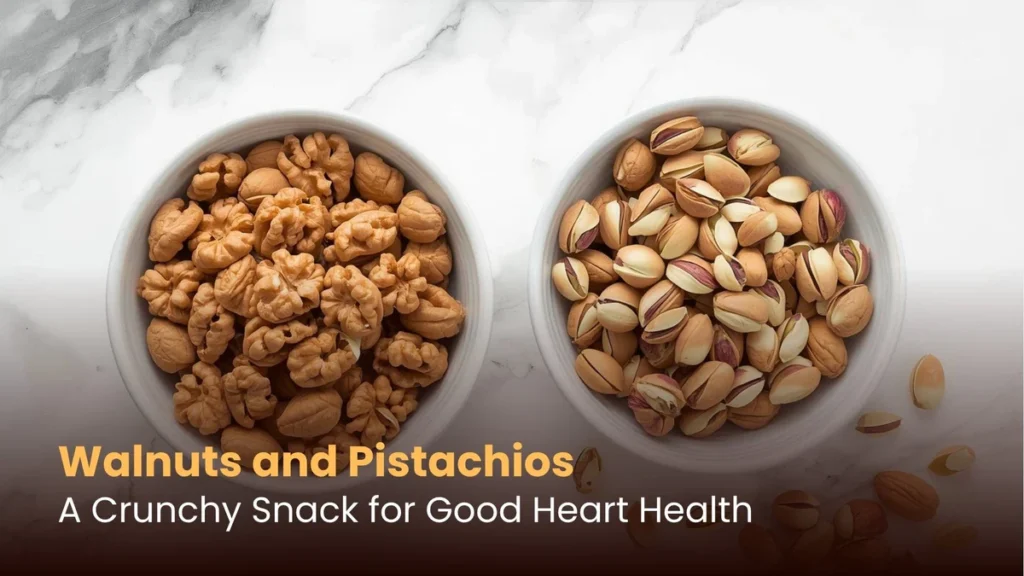
Heart disease remains one of the leading health concerns worldwide, and while genetics and lifestyle both play a role, diet is one of the most powerful factors we can actually control. Among everyday foods, nuts consistently show up in research as beneficial for heart health. Not because they are trendy—but because of how their nutrients […]
Heart disease remains one of the leading health concerns worldwide, and while genetics and lifestyle both play a role, diet is one of the most powerful factors we can actually control.
Among everyday foods, nuts consistently show up in research as beneficial for heart health. Not because they are trendy—but because of how their nutrients interact with the body over time.
Heart health is not built in a day—it’s shaped by small, repeated choices. Nuts happen to be one of the simplest of those choices.
Let’s look at what science actually says.
Why Nuts Are Considered Heart-Friendly
Nuts are rich in a combination of nutrients that directly influence cardiovascular health:
Unsaturated (healthy) fats
Fiber
Plant compounds (antioxidants)
Minerals like magnesium
This combination supports several key functions related to the heart.
1. Improving Cholesterol Levels
One of the most studied effects of nuts is their impact on cholesterol.
Regular consumption has been associated with:
Lower LDL (“bad” cholesterol)
Improved HDL (“good” cholesterol) balance
This matters because high LDL levels are linked with increased risk of heart disease.
It’s not about eliminating fats—it’s about choosing the right ones.
2. Reducing Inflammation
Chronic, low-level inflammation plays a role in heart disease.
Nuts contain compounds that help:
Reduce inflammatory markers
Support overall vascular health
This effect is subtle but important over time.
3. Supporting Blood Vessel Function
Healthy blood vessels are essential for proper circulation.
Nutrients in nuts help:
Maintain flexibility of blood vessels
Support proper blood flow
Reduce strain on the cardiovascular system
4. Helping with Blood Pressure
Certain minerals in nuts, especially magnesium and potassium, support:
Blood pressure regulation
Muscle relaxation (including blood vessels)
While nuts alone don’t control blood pressure, they contribute to an overall supportive diet.
5. Supporting Weight and Metabolic Health
Heart health is closely linked with:
Body weight
Blood sugar levels
Overall metabolism
Nuts help:
Improve satiety
Reduce unhealthy snacking
Support stable energy
This indirectly benefits heart health.
What Types of Nuts Are Most Beneficial?
While most nuts offer benefits, some stand out:
Almonds → support cholesterol balance
Walnuts → rich in omega-3 fats
Pistachios → help with blood sugar and appetite control
Each contributes slightly differently, but all fit into a heart-friendly diet.
How Much Do You Need?
You don’t need large amounts.
A typical recommendation:
A small handful daily (about 20–30 grams)
Consistency matters more than quantity.
Raw vs Roasted: Does It Matter?
Raw nuts retain maximum nutrients
Dry roasted nuts are still beneficial
The key is to avoid:
Excess salt
Unhealthy oils
What Science Does NOT Say
It’s important to stay realistic.
Nuts do not:
Replace medical treatment
Act as a quick fix
Guarantee prevention of heart disease
They are part of a pattern—not a solution on their own.
A Practical Way to Include Nuts
Add to breakfast (oats, yogurt)
Use as a snack instead of processed foods
Mix different types for variety
Small habits, repeated daily, build long-term results.
Final Thought
The strength of nuts lies in their simplicity.
You don’t need complicated diets to support your heart—just consistent, better choices.
And a small handful of nuts each day is one of the easiest ways to move in that direction.