
There’s a reason certain foods are often called “protective” or “healing.” Not because they act like medicine, but because they contain compounds that quietly support your body at a deeper level. One of the most important of these compounds is polyphenols. You may not hear about them as often as vitamins—but their impact on long-term […]
One of the most important of these compounds is polyphenols.
You may not hear about them as often as vitamins—but their impact on long-term health, aging, and heart function is significant.
Polyphenols don’t just feed your body—they protect it.
Polyphenols are natural compounds found in plant-based foods.
They give:
Common sources include:
These are not rare or exotic foods—they’re part of everyday diets when eating naturally.
To understand their importance, you need to look at what they actually do.
Your body is constantly exposed to oxidative stress—a process that damages cells over time. This damage is linked to aging and many chronic diseases.
Polyphenols act as antioxidants, meaning they:
Aging is not just about time—it’s about how much damage your cells accumulate.
Polyphenols help slow that process.
When people hear “anti-aging,” they often think of appearance. But real aging happens inside the body.
Polyphenols support:
This can reflect externally as:
But the real benefit is internal—supporting your body over the long term.
One of the strongest areas of research on polyphenols is their role in heart health.
They help:
Foods rich in polyphenols—like nuts, seeds, and olive oil—are often linked with lower risk of heart disease.
A healthy heart is not built overnight—it’s supported daily through consistent choices.
Polyphenols don’t work alone—they interact with your gut.
When you consume them:
This creates a two-way relationship that improves:
Polyphenols are most effective when consumed through real foods, not isolated supplements.
That’s because they come bundled with:
These elements work together, creating a combined effect that supplements often can’t replicate.
Nature doesn’t deliver nutrients in isolation—and your body benefits from that combination.
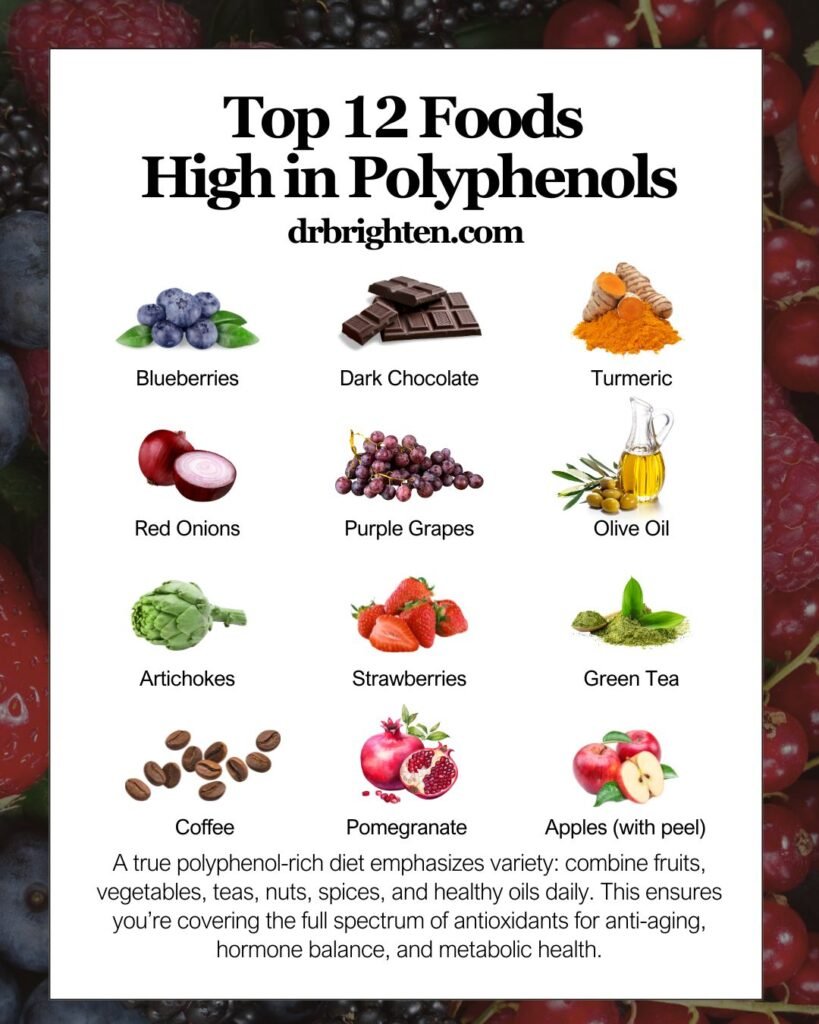
You don’t need special products to benefit from them.
Simple additions to your diet can include:
The key is variety.
Instead of focusing on one “superfood,” think in terms of patterns:
Small, consistent habits allow these compounds to work over time.
Polyphenols are not something you feel immediately. They work quietly, reducing damage, supporting systems, and improving resilience.
Health is not just about what you add—it’s about what you protect.
And in many ways, polyphenols are part of that protection—working in the background, every single day.