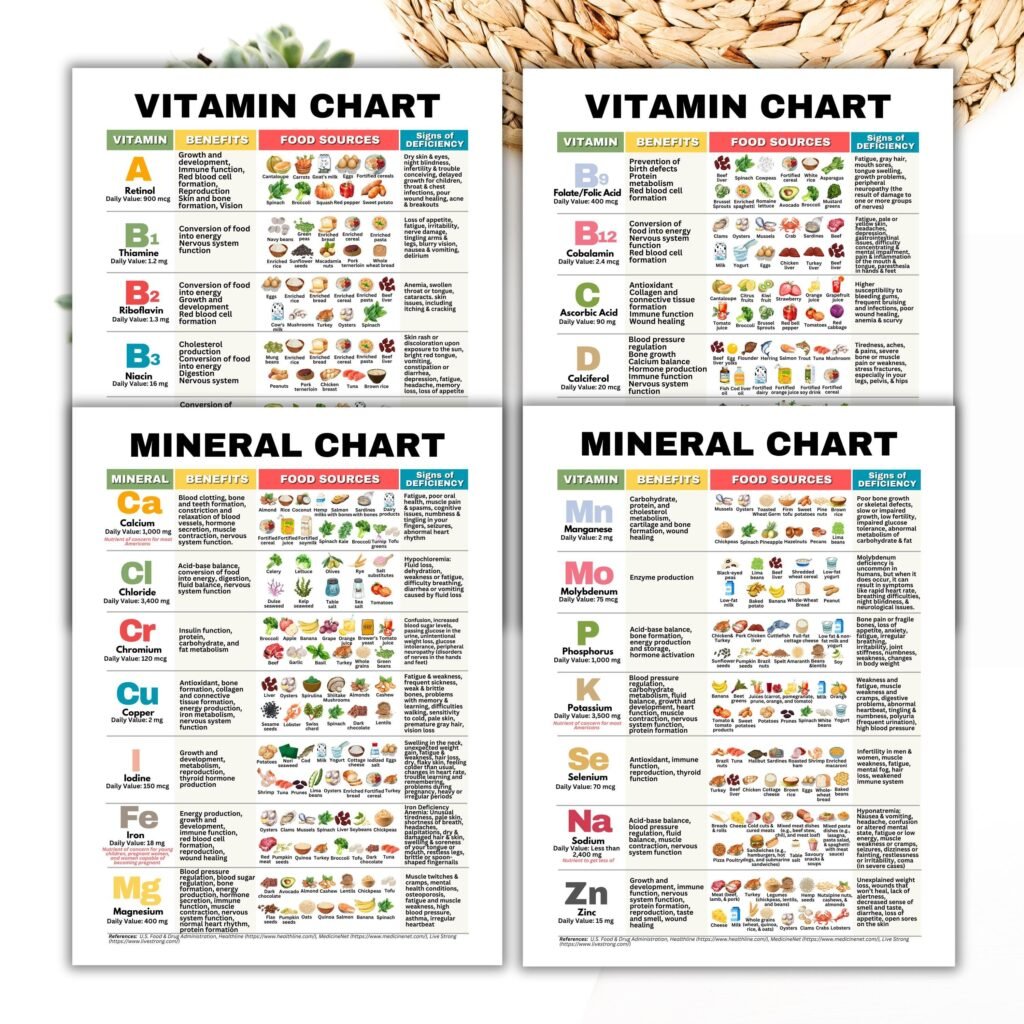
Vitamins and minerals are often called micronutrients because the body needs them in relatively small amounts. But “small amounts” does not mean small importance. These nutrients help the body grow, repair, defend itself, make energy, support the brain and nerves, and keep bones, blood, muscles, and immunity functioning properly. Harvard’s Nutrition Source defines vitamins and […]
Vitamins and minerals are often called micronutrients because the body needs them in relatively small amounts. But “small amounts” does not mean small importance. These nutrients help the body grow, repair, defend itself, make energy, support the brain and nerves, and keep bones, blood, muscles, and immunity functioning properly. Harvard’s Nutrition Source defines vitamins and minerals as micronutrients required for a range of normal body functions, and notes that they must come from the food we eat because the body generally cannot make enough of them on its own.
Macronutrients like carbs, protein, and fat give the body fuel. Vitamins and minerals help the body use that fuel correctly.
What vitamins do
Vitamins are organic compounds that support many daily body processes. Some help release energy from food, some support immunity, some protect cells from damage, and others are critical for blood clotting, vision, skin, or nerve function. Harvard Health notes that micronutrients play roles in brain, muscle, bone, skin, blood, and immune health.
A few examples make this easier to understand:
Vitamin C helps with wound healing, collagen formation, and immune support, and also acts as an antioxidant.
Vitamin D helps the body absorb and retain calcium and phosphorus, both of which are important for bones.
Vitamin A supports vision, immunity, and healthy tissues.
Vitamin E acts mainly as an antioxidant and also supports immune function.
B vitamins help the body turn food into usable energy and support nerves, blood cells, and metabolism. Harvard’s B1 and folate pages are good examples of how these vitamins work.
What minerals do
Minerals are inorganic elements the body needs for structure, signaling, fluid balance, and many biochemical functions. They are just as essential as vitamins.
A few key examples:
Calcium is important for bones and teeth, but also for muscle contraction and nerve signaling. Harvard’s vitamin D guidance highlights its close connection with calcium absorption.
Iron helps carry oxygen in the blood. Low iron intake can contribute to fatigue and anemia. Harvard includes iron among key micronutrients in its vitamins and minerals guidance.
Magnesium supports muscle and nerve function and helps the body produce energy. It is commonly found in leafy greens, nuts, seeds, and legumes. Harvard includes it in broader micronutrient coverage.
Zinc supports immune function, growth, and healing. NIH’s ODS includes zinc among its core vitamin and mineral fact sheets.
Potassium helps regulate fluid balance, muscle contractions, and heart function. Harvard lists it among important micronutrients.
Why they matter so much
The role of vitamins and minerals is best understood in one phrase: they help keep body systems running normally.
Without enough of them, the body may still get calories, but it cannot perform as well. Harvard notes that deficiencies in micronutrients can lead to illness, even though the body only needs small amounts.
That is why someone can eat a lot of food and still have poor nutrition. A diet built mostly around highly processed foods may provide enough energy, but not enough of the vitamins and minerals needed for long-term health. NIH’s Office of Dietary Supplements also emphasizes that getting recommended intakes of vitamins and minerals from food—and supplements as needed—promotes health.
Calories can fill the body. Micronutrients help the body function.
Food first is usually the best approach
For most people, the best way to get vitamins and minerals is through a varied diet rather than depending only on supplements. Harvard’s vitamins and minerals guidance points toward food as the basic source, and NIH’s Office of Dietary Supplements says most research suggests recommended intakes from food, with supplements as needed, promote health.
That usually means eating a mix of:
vegetables and leafy greens
fruit
beans and lentils
nuts and seeds
dairy or fortified alternatives
eggs, fish, poultry, or other protein foods
whole grains
One reason whole foods matter so much is that they provide vitamins and minerals together, in combinations the body is used to handling.
Do supplements replace a good diet?
Not really.
Supplements can be useful in certain situations, but they are not a perfect replacement for food. NIH notes that some people may benefit from specific nutrients or multivitamin/mineral supplements, but the need depends on the individual and the nutrient involved.
There are also nutrients for which individual needs may vary by age, sex, pregnancy status, and medical situation. NIH’s nutrient recommendations tool reflects this by using Dietary Reference Intakes that differ across life stages.
So the practical message is:
build your base from food
use supplements when there is a clear reason
do not assume “more” always means “better”
The easiest way to think about them in daily life
You do not need to memorize every vitamin and mineral to eat better. A simpler approach works:
eat more colorful fruits and vegetables
include protein foods
choose whole grains more often
add nuts and seeds
include dairy or fortified alternatives if they fit your diet
This improves your chance of getting a broader range of micronutrients without turning every meal into a calculation.
Final thought
The role of vitamins and minerals is foundational. They do not usually get the same attention as calories, protein, or carbs, but without them the body cannot do its everyday work properly. They support immunity, blood, bones, nerves, metabolism, and much more.
A healthy diet is not only about eating enough. It is also about eating with enough variety and quality that the body gets the micronutrients it depends on every day.