

Omega-3 has become one of the most talked-about nutrients in health—and for good reason. It’s linked to heart health, brain function, and inflammation control. But when it comes to seeds like chia and flax, there’s often confusion. Are they really good sources of omega-3?Or is there something important people are missing? Not all omega-3 is […]
Omega-3 has become one of the most talked-about nutrients in health—and for good reason. It’s linked to heart health, brain function, and inflammation control.
But when it comes to seeds like chia and flax, there’s often confusion.
Are they really good sources of omega-3?
Or is there something important people are missing?
Not all omega-3 is the same—and that detail changes everything.
To understand this properly, you need to know that omega-3 comes in three main forms:
Seeds like chia and flax provide ALA, not EPA or DHA.
Your body can convert ALA (from seeds) into EPA and DHA—but only in small amounts.
This means:
The body has to do extra work—and the conversion is limited.
Not at all.
Seeds still provide important benefits:
Even if conversion is limited, regular intake still adds value.
ALA itself is associated with:
Unlike isolated supplements, seeds also provide:
This makes them part of a more complete food.
Both are strong plant sources.
The difference exists—but both are beneficial when used regularly.
Many people believe:
“Eating seeds gives the same omega-3 as fish.”
This is not accurate.
Seeds provide a form of omega-3—but not the most active forms your body directly uses.
A balanced approach works best.
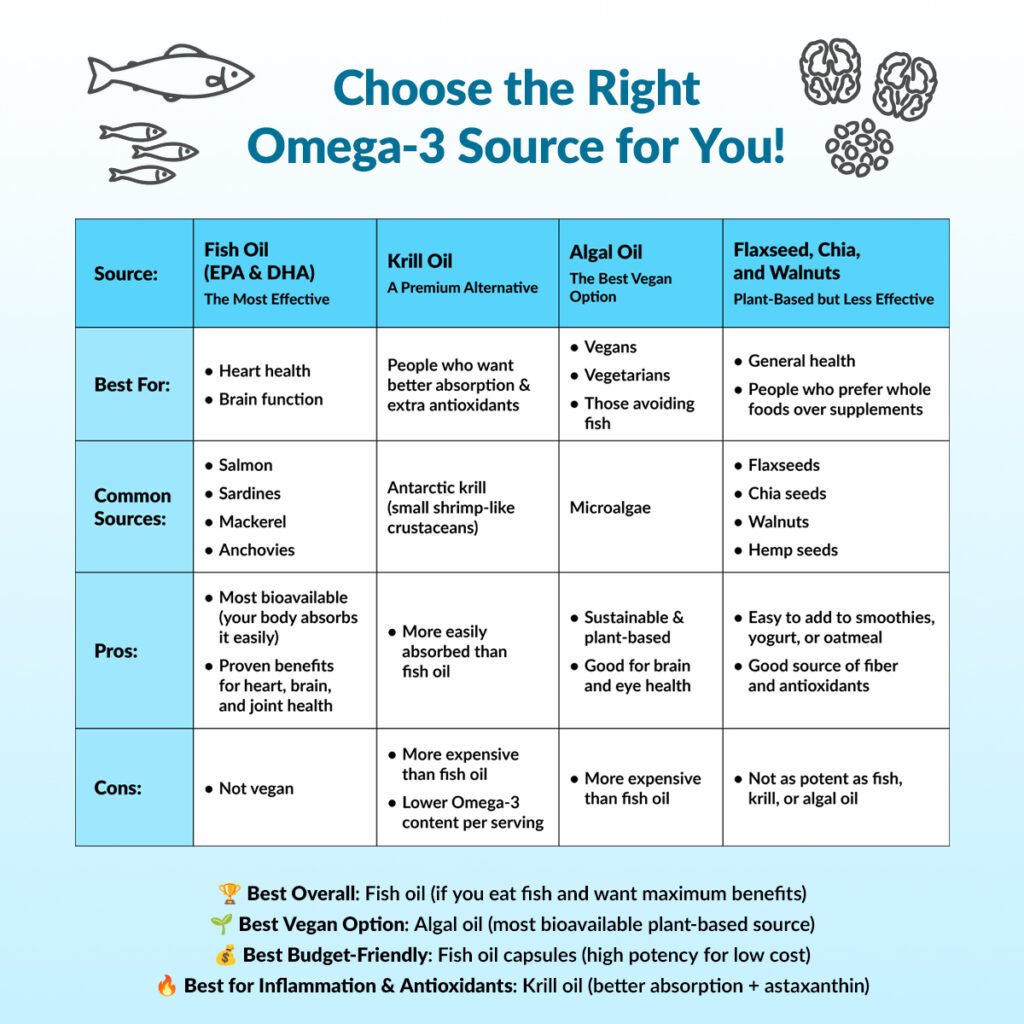
Seeds are especially useful for:
They are a simple way to improve overall nutrition.
Consistency matters more than quantity.
Seeds are valuable—but understanding their limits makes them even more useful.
They don’t replace all omega-3 sources—but they strengthen your diet in a natural and practical way.
And when used consistently, that small addition can make a meaningful difference over time.