Antioxidants are substances that help protect cells from damage caused by free radicals or other unstable molecules. Harvard describes them as compounds that can counteract free radicals, which can damage DNA, cell membranes, and other parts of cells. That does not mean antioxidants are a magic shield or a cure for disease. The more accurate […]
Antioxidants are substances that help protect cells from damage caused by free radicals or other unstable molecules. Harvard describes them as compounds that can counteract free radicals, which can damage DNA, cell membranes, and other parts of cells.
That does not mean antioxidants are a magic shield or a cure for disease. The more accurate idea is this:
antioxidants are part of the body’s normal defense system.
Your body makes some antioxidants on its own, and you also get them from food. NCCIH says additional antioxidants come from foods such as fruits, vegetables, and grains, and some are also available as supplements.
What do antioxidants actually do?
In simple terms, they help limit damage from oxidative stress. Free radicals are produced during normal metabolism and can also come from outside exposures such as pollution and cigarette smoke. When too many build up, they can contribute to cellular damage.
That is why antioxidants matter. They help the body manage that stress and support normal cell protection. Common antioxidants include:
vitamin C
vitamin E
beta-carotene and other carotenoids
selenium and manganese
Why do you need them?
You need antioxidants because the body is constantly dealing with oxidation as part of everyday life. Harvard notes that antioxidants act like an “off switch” for free radicals by neutralizing them. Vitamin C, for example, is described by Harvard as a powerful antioxidant that helps neutralize harmful free radicals.
This does not mean more is always better. NCCIH notes that while antioxidants are important, the evidence for antioxidant supplements is mixed and depends on the condition and the specific supplement.
The best place to get antioxidants
For most people, food is the best place to start.
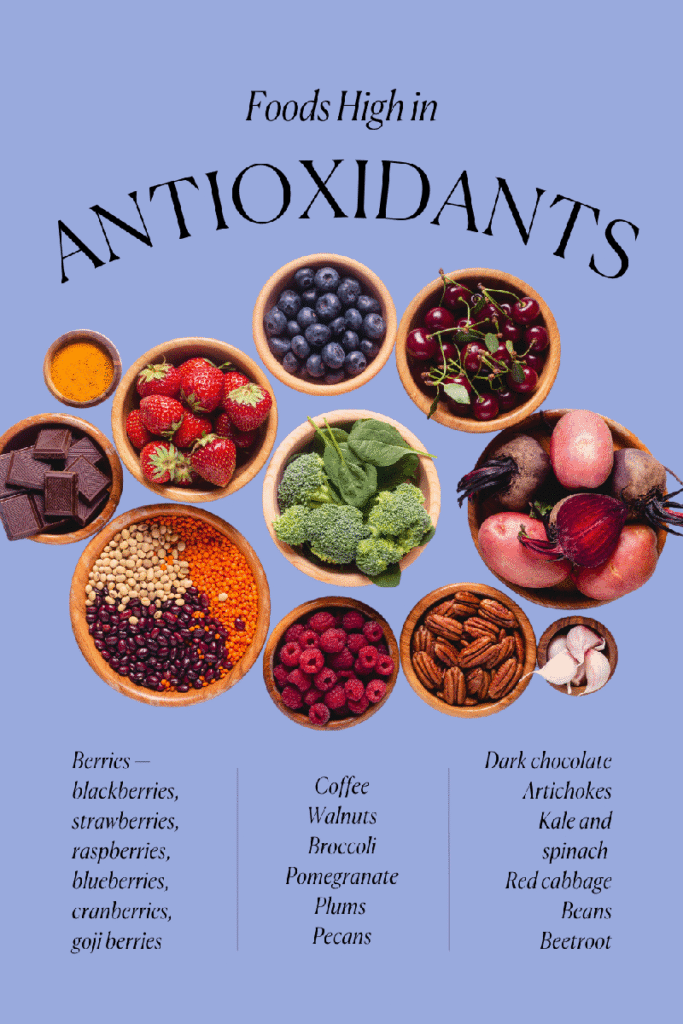
Antioxidants are found mainly in plant foods, especially colorful ones. Harvard notes that there are hundreds or even thousands of substances that can act as antioxidants, and many come packaged naturally in foods.
Good food sources include:
berries
leafy greens
citrus fruits
nuts and seeds
beans and lentils
colorful vegetables
whole grains
The advantage of getting antioxidants from food is that they come with fiber, vitamins, minerals, and other helpful plant compounds at the same time.
Should you take antioxidant supplements?
Not automatically.
NCCIH says antioxidant supplements have been studied for different health outcomes, but results are mixed, and they should not be treated like a guaranteed shortcut to better health. There are specific cases where certain supplement formulas may help, such as AREDS-related supplements for some people with intermediate age-related macular degeneration, but that is a targeted medical use, not a general rule for everyone.
So for a general Knowledge Hub takeaway:
food first is the stronger everyday approach
supplements should have a reason, not just a trend
more antioxidants does not always mean more benefit
A simple way to think about it
If your plate regularly includes colorful, minimally processed foods, you are already moving in the right direction.
You do not need to chase one “superfood.” You need a pattern of eating that includes a variety of antioxidant-rich foods over time. Harvard’s guidance on antioxidants and overall healthy eating points in exactly that direction.
Final thought
Antioxidants are protective compounds that help the body deal with free-radical damage, and you need them as part of normal health. The best everyday strategy is usually not a pill bottle or a wellness claim. It is a diet built around fruits, vegetables, grains, nuts, seeds, and other whole foods