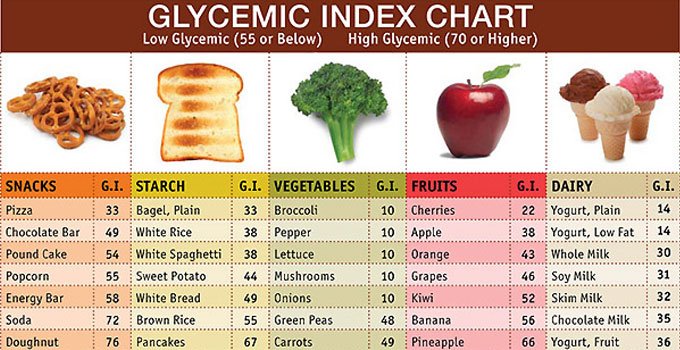
The glycemic index, or GI, is a way of ranking carbohydrate-containing foods by how quickly they raise blood sugar after you eat them. It is usually measured on a scale from 0 to 100. Foods are generally grouped as low GI (55 or less), medium GI (56–69), and high GI (70 or above). That sounds […]
The glycemic index, or GI, is a way of ranking carbohydrate-containing foods by how quickly they raise blood sugar after you eat them. It is usually measured on a scale from 0 to 100. Foods are generally grouped as low GI (55 or less), medium GI (56–69), and high GI (70 or above).
That sounds technical, but the basic idea is simple:
Not all carbohydrates behave the same way in the body.
A bowl of oats, a slice of white bread, and a sugary drink may all contain carbohydrates, but they do not raise blood sugar in the same way. Harvard explains that foods with a high GI are digested more quickly and can cause bigger blood sugar fluctuations, while lower-GI foods are digested more slowly and tend to produce a gentler rise.
Why the glycemic index matters
GI matters because it helps explain blood sugar response, not just sugar content. A food can contain carbohydrates and still affect the body more gradually, while another carbohydrate-rich food may raise blood sugar much faster. NHS guidance says GI can be useful for people managing diabetes or prediabetes as part of an overall healthy diet.
This is why GI often comes up in conversations about:
diabetes and prediabetes
energy levels
cravings
meal planning
choosing between refined and whole-food carbohydrates
Low, medium, and high GI foods
Here is the basic classification used in clinical and educational guidance:
Low GI: 55 or less
Medium GI: 56 to 69
High GI: 70 and above
In general:
foods like whole oats tend to be lower GI
foods like white bread tend to be higher GI
Harvard also notes that refined grains tend to have a higher glycemic index and glycemic load than whole grains, partly because refining removes fiber and nutrients that help slow absorption.
What changes a food’s GI?
GI is not only about whether something is “sweet.” It is influenced by several things, including:
how processed the food is
how much fiber it contains
whether it is eaten with fat or protein
how ripe it is in some foods, such as fruit
how it is cooked
This helps explain why two foods with similar carbs may affect blood sugar differently.
GI is useful, but it is not the whole story
This is the part many people miss.
A food with a low GI is not automatically healthy, and a food with a high GI is not automatically unhealthy. One NHS fact sheet gives a very clear example: a baked potato may have a high GI, while crisps may have a lower GI, but that does not make crisps the healthier choice. The same source notes that chocolate and ice cream can fall in the low-to-medium GI range, yet that does not make them ideal everyday foods.
So GI should be used in context, not as the only measure of food quality. NHS and Harvard both emphasize overall balanced eating rather than judging foods by GI alone.
GI is a useful tool. It is not a complete nutrition system.
GI vs glycemic load
People often confuse glycemic index with glycemic load.
Glycemic index tells you how quickly a carbohydrate food raises blood sugar.
Glycemic load takes both the GI and the amount of carbohydrate in a normal serving into account. Harvard’s Nutrition Source explains this distinction clearly.
That matters because a food might have a high GI, but if you usually eat only a small amount, the overall effect on blood sugar may be smaller than expected.
A practical way to use GI
The most useful way to use GI is not to obsess over numbers. It is to make a few better choices more often:
choose whole grains more often than refined grains
combine carbohydrates with protein, fiber, or healthy fats
use GI as one guide for blood sugar awareness, not the only rule
pay attention to your overall meal, not just one ingredient
For example:
oats + yogurt + nuts will usually behave more steadily than a sugary pastry
a balanced meal with vegetables, protein, and a whole-grain carbohydrate will often affect blood sugar more gently than a meal built mainly around refined starches or sugary drinks
Final thought
The glycemic index is simply a way of understanding how fast carbohydrate foods raise blood sugar. It can be helpful, especially for people thinking about diabetes, energy, or better carbohydrate choices. But it works best when used alongside the bigger nutrition picture: fiber, food quality, portion size, and overall balance.